

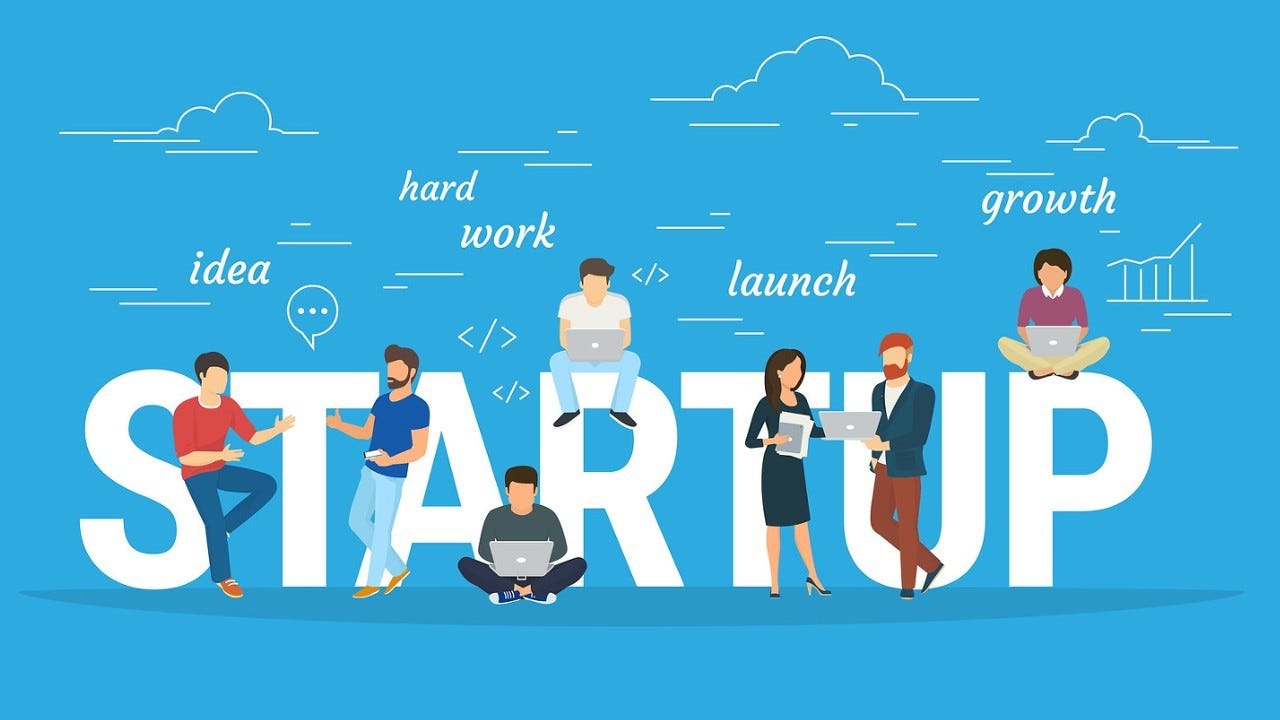
Something unusual is happening in the early-stage trenches.
Founders are launching products, shipping updates, running marketing, handling ops all without hiring a single employee.
Not because they’re frugal.
Because they don’t need to.
Agentic AI systems are becoming the first real non-human teammates: autonomous, tireless, and cheap enough to scale like software.
And a new species of startup is emerging around them , teams of one to three people doing the work of two hundred.
What’s Actually Changing
Traditional startups are built around headcount.
Growth meant adding bodies. Capacity meant payroll. Execution meant a village.
That logic is dissolving.
A founder today can spin up:
an AI engineering team that iterates 24/7,
an AI sales force that never tires,
an AI research department that reads the entire internet before breakfast.
The constraint is no longer labor.
It’s imagination the ability to orchestrate a swarm of agents instead of managing human teams.
This flips an old equation: capital + hiring = progress.
Now it’s tools + orchestration = progress.
The New Founder Profile
The most dangerous founders in the next decade won’t be operators.
They’ll be conductors.
Their skill won’t be people management, it will be designing workflows, defining boundaries, and stitching together agentic systems that cooperate like a digital organism.
A two-person team with a hundred competent AI agents doesn’t look like a small startup.
It looks like a new organizational species.
Why It Matters for the Rest of Us
This shift doesn’t just change entrepreneurship.
It hits labor economics at the root.
If tiny teams can compete with well-funded incumbents:
market entry gets cheaper,
innovation cycles compress,
and bargaining power tilts away from large organizations.
A world where millions can build companies without hiring creates both opportunity and risk.
Opportunity because entrepreneurship becomes radically accessible.
Risk because the traditional scaffolding of employment, wages, benefits, stability may erode faster than society can replace it.
We’re entering an era where the question isn’t “How many employees do you have?”
It’s “How many agents can you command?”
The Quiet Lesson
Every industrial revolution redefined what it meant to build.
This one redefines who gets to build at all.
The founder becomes smaller.
The leverage becomes larger.
And the future of work becomes something we’ve never quite seen before:
human intention amplified by a digital workforce that never clocks out.