

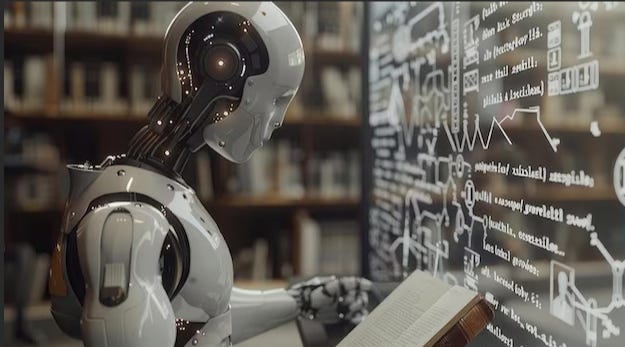
Let’s talk about something that sounds reassuring on the surface.
AI can now check its own work.
If you’ve been following AI agents the ones that carry out long, multi-step tasks you’ll know their biggest weakness is not intelligence.
It’s accumulation.
They make small mistakes. Then they build on them.
One wrong assumption early in a 40-step process quietly bends everything that follows.
By the end, the answer looks polished. Coherent. Confident.
The flaw is buried somewhere in the middle where no one thought to look.
So, the industry’s answer for 2026 is something called self-verification.
In simple terms: the AI pauses, reviews what it just produced, and corrects itself before moving forward.
Internal feedback loops.
Fewer humans hovering over every stage.
On paper, this is real progress.
Systems become more stable.
Less fragile.
More scalable.
You don’t need a person double-checking every output.
But here’s the part worth sitting with.
When a system checks its own reasoning, it uses the same reasoning architecture that produced the original answer.
Same training data.
Same assumptions.
Same blind spots.
If there’s a structural misunderstanding baked in, the “check” doesn’t remove it. It repeats it.
It’s like proofreading your own writing.
You don’t miss errors because you’re careless.
You miss them because your brain knows what it meant to say. It fills in the gaps automatically.
AI does something similar. If it is consistently wrong in a particular way, it can consistently verify that it’s right.
Self-verification reduces random mistakes. It does not eliminate systematic ones.
And that’s where this stops being a technical story.
In aviation, pilots don’t certify their own safety compliance.
In finance, traders don’t audit their own books.
In medicine, diagnoses aren’t self-approved.
There’s always separation of duties.
This does not mean experts lack intelligence, but because intelligence and independence are different safeguards.
As AI systems begin reviewing their own work, that principle doesn’t become outdated.
It becomes more important.
Better self-checking makes AI smoother. Faster. More autonomous.
But trust has never been self-awarded.
And the moment we let systems become both the creator and the final judge of their own output; we’re not just upgrading software.
We’re redrawing the line between automation and accountability.